
Hey Cook-es,
The topic for the week is going to be about something that I feel make a lot of people skeptics.
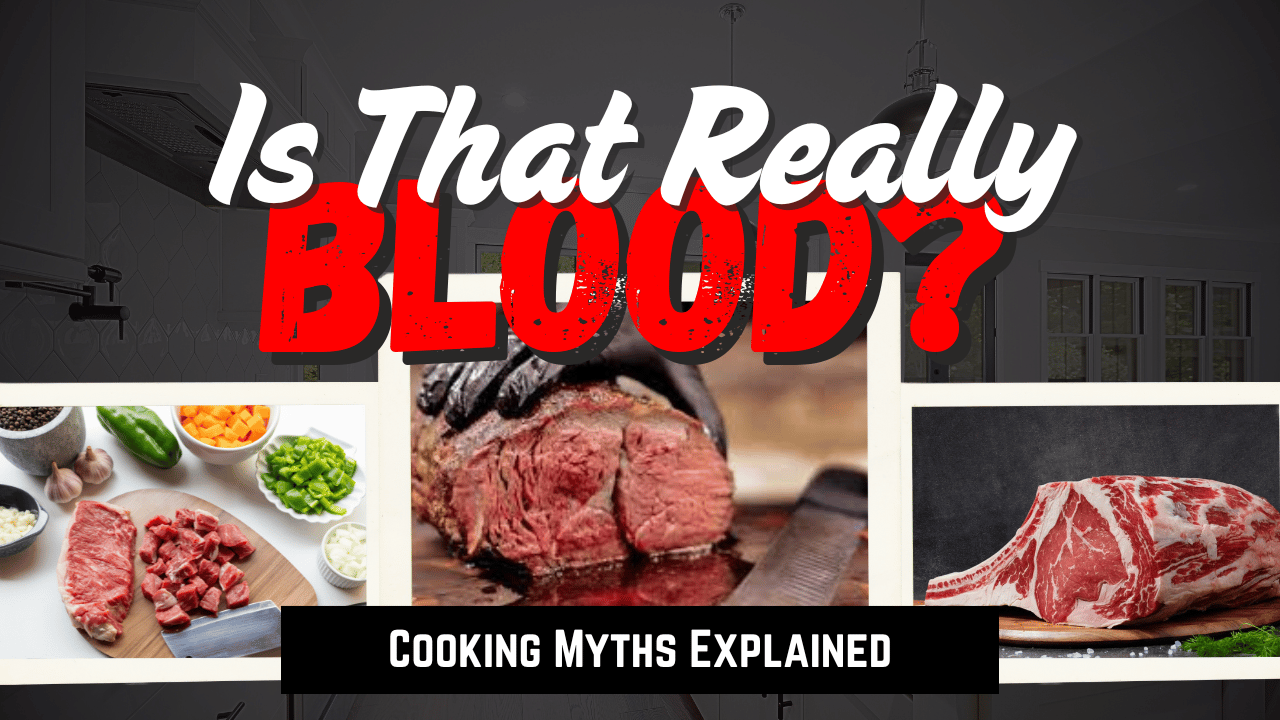
When you cut into that juicy Ribeye, and you see that reddish, pinkish liquid come from it, do you have a clue as to what it is? Or do you assume that, because of its color, that it's "blood?"
What if it isn't?
What there is a scientific reason why that liquid appears that way?
I will putting this debate to bed ONCE AND FOR ALL...
Will I debunk it, or will I prove it to be true?
So the question is:
Is that really blood?
When I mention "blood," I am talking about that red stuff the oozes from meat, particularly in red meat.
That red stuff is what some would equate to a steak or burger to being labeled as, "juicy."
Before we get into the analytical breakdown and my own personal experience, we must first understand this:
The level of juiciness depends on the amount of time that piece of meat has spent cooking.
This is why we have internal temperatures that we can follow to help guide us to the correct doneness.
Unfortunately, the stigma is that when a person sees that juiciness, they automatically assume its “blood” and that that piece of meat isn’t quite done yet.
But we must understand that there are some safety standards that protect us from eating something raw.
According to the Food and Safety and Inspection Service of the USDA, there are recommended internal temps for cooking different kinds of meats:
But how does this tie into the main question?
If you understand that there are internal temperatures set in place to determine doneness, then you understand that if you reach a certain temp that means that meat is cooked to a safe temperature to consume. And at certain temperatures, especially with a steak, there will be colors, there will be juices that are visual aids in indicating that doneness.
So we can eliminate the idea of it automatically being raw just because of its color or juice off rip, especially if the temperature hasn't been checked to confirm that it's safe to eat.
But that’s only half of the deal.
We need to discover if that juice that comes out of that steak is blood or not.
So What Is It?
What you’re seeing when you cut into that steak or any other red meat is called myoglobin. The juices that come out are a mixture of mostly water and myoglobin, which is a protein found in the muscle tissue. When the iron in myoglobin is exposed to oxygen, it turns a reddish-pinkish color.
The Difference between Red Meat and White Meat
The difference between red meat and white meat is the amount of myoglobin that mammal had in its muscle tissue. More myoglobin equals a redder color AKA Red meat. Less or no myoglobin equals a less reddish color AKA white meat.
In my latest video, I created a visual aid to help you get a better understanding of what this looks like.
The origins of how dark this “blood” appears begins at the time of harvesting the animals. When an animal is young, it tends to carry less muscle tissue resulting in less myoglobin. When a pig or a chicken are sent to the slaughter house they are usually younger. Resulting in a pinkish or light red colors in the meats. Cows however tend to be older at the time of butchering, so the liquids from beef chucks or steaks appear darker.
I must also mention that the actual blood of the animal is drained when butchering.
Nearly all states are required by law (the Humane Methods of Livestock Slaughter Act to be exact) to render animals insensible to pain before the act of slaughtering and bled out. With exception to religious slaughter.
Meaning, no matter how red that steak gets or “blood” that comes out, its actually bloodless.
My Professional Advice?
The next time you cook a steak, try to shoot for medium, meaning its going to be a rosy pink to red center, with a slightly firm and springy consistency.
Some of the best are cooked in a nice Cast Iron Skillet. (ad) But don't be afraid to use what you have!
You can get a feel for what that will look like by taking your thumb and touching to the tip of your middle or ring finger. Those are good consistencies for steaks. About 6 minutes on each side depending on the size of the steak, and letting it rest for about 10 minutes before cutting to avoid having tons of juices on the cutting board and instead of your meat for the best flavor!
So...
I think I’ve to a conclusion.
I ask again, Is that really blood?
The answer is: No. It is myoglobin, a protein found in the muscle tissue of animals enriched with iron that turns red upon exposure to oxygen.
This myth has been debunked!
Comments ()